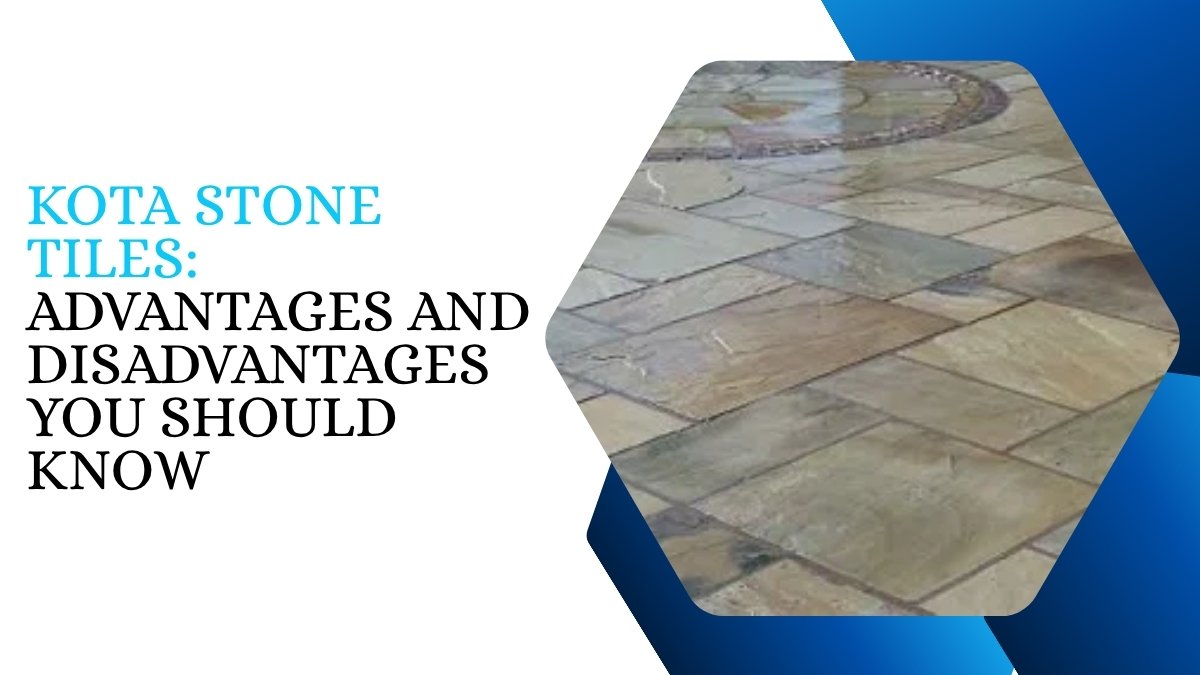
When choosing flooring for a home, office, commercial building, or outdoor area, natural stone is often preferred because of its durability, attractive appearance, and long service life. Among the various natural stones available in India, Kota Stone Tiles are a popular option for both residential and commercial applications.
Known for their strength, earthy appearance, affordability, and versatility, Kota stone products are widely used for flooring, pathways, balconies, terraces, staircases, parking areas, and other spaces. However, like every natural flooring material, Kota stone also has certain limitations that should be considered before making a purchase.
Understanding the advantages and disadvantages of Kota Stone Tiles can help you decide whether they are suitable for your project.
What Are Kota Stone Tiles?
Kota stone is a type of fine-grained limestone quarried primarily in the Kota region of Rajasthan, India. It is recognized for its natural strength, relatively uniform texture, and subtle colors.
Kota Tiles are generally cut from natural Kota stone slabs into specific sizes and thicknesses according to the requirements of a project. They can be supplied in different finishes, including polished, honed, natural, or other surface treatments.
The stone is commonly available in shades such as bluish-grey, greenish-grey, brown, and other earthy tones. Its simple appearance makes it suitable for both traditional and contemporary architectural designs.
Why Are Kota Stone Tiles Popular?
The popularity of Kota stone comes from a combination of practical and aesthetic characteristics. It is generally durable, relatively economical compared with several premium natural stones, and suitable for high-traffic areas.
Unlike some decorative flooring materials, Kota Stone offers a natural appearance without requiring an elaborate design. Its understated texture can complement a wide variety of architectural styles.
It is also commonly used in areas where durability and easy maintenance are important considerations.
Advantages of Kota Stone Tiles
1. Excellent Durability
One of the biggest advantages of Kota stone is its durability. When properly selected, installed, and maintained, it can withstand considerable foot traffic and regular use.
This makes it suitable for:
- Residential flooring
- Commercial buildings
- Corridors
- Staircases
- Walkways
- Parking areas
- Public spaces
Its strength makes it a practical choice for projects where flooring is expected to remain functional for many years.
2. Cost-Effective Natural Flooring
Compared with several premium natural stones, Kota stone is often considered an economical flooring material.
The overall cost depends on factors such as:
- Stone quality
- Thickness
- Size
- Finish
- Transportation
- Installation
- Polishing requirements
For large projects, choosing Kota stone can provide a natural-stone appearance while keeping material costs relatively manageable.
3. Suitable for High-Traffic Areas
Flooring in commercial buildings and public spaces needs to withstand continuous movement. Kota stone can perform well in such environments when the appropriate grade and finish are selected.
It is commonly considered for areas such as entrances, hallways, courtyards, institutional buildings, and outdoor pathways.
4. Natural and Elegant Appearance
Kota stone has a simple, earthy appearance. Unlike highly patterned stones, it generally offers a more subtle visual effect.
This makes Kota Tiles suitable for people who prefer:
- Minimalist interiors
- Natural textures
- Neutral color schemes
- Traditional designs
- Contemporary spaces
The stone can also be combined with other materials to create borders, patterns, or contrasting flooring designs.
5. Versatile Applications
Another advantage is its versatility. Kota Stone Tiles can be used in numerous residential, commercial, and outdoor applications.
Common uses include:
- Living room flooring
- Kitchen areas
- Balconies
- Terraces
- Staircases
- Garden pathways
- Courtyards
- Parking spaces
- Office floors
- School and institutional buildings
- Commercial walkways
The appropriate thickness and finish should be selected according to the intended application.
6. Good Choice for Outdoor Areas
Certain Kota stone finishes are suitable for outdoor applications because the material can handle regular environmental exposure.
It is often used for patios, garden paths, terraces, courtyards, and outdoor flooring.
For outdoor areas, selecting a suitable non-slip or textured finish can be particularly important, especially in locations that may become wet.
7. Easy to Clean and Maintain
Kota stone is generally straightforward to clean when properly installed and sealed.
Routine maintenance may include:
- Sweeping or dust removal
- Mopping with a suitable stone-safe cleaner
- Promptly cleaning spills
- Periodic maintenance according to the finish
Harsh acidic cleaners should generally be avoided because natural limestone-based stones can be sensitive to acids.
8. Long-Term Value
Because of its durability and timeless appearance, Kota stone can offer good long-term value.
A well-installed stone floor may remain usable for many years with appropriate maintenance. If the surface becomes dull or develops minor wear, professional polishing or refinishing may help restore its appearance, depending on the stone and finish.
Disadvantages of Kota Stone Tiles
Although Kota stone has many benefits, it is important to understand its limitations before choosing it.
1. Limited Color Variety
Compared with engineered tiles, porcelain tiles, or some other natural stones, Kota stone generally has a more limited range of colors and patterns.
Its appearance is mainly characterized by natural earthy shades. Therefore, it may not be ideal for someone looking for bright colors, intricate patterns, or highly decorative flooring.
2. Can Be Porous
Like other natural stones, Kota stone can have varying degrees of porosity. If it is not properly treated, liquids may penetrate the surface and potentially contribute to staining.
Proper installation and sealing can help reduce this concern.
Areas exposed to frequent spills may require more careful maintenance and periodic sealing depending on usage and finish.
3. Requires Professional Installation
Although Kota stone is durable, achieving a high-quality finished floor requires proper installation.
Incorrect installation can result in:
- Uneven surfaces
- Visible joints
- Cracks
- Improper alignment
- Water-related problems
- Premature surface deterioration
Experienced installers should understand stone thickness, base preparation, leveling, joint treatment, and finishing requirements.
4. Surface Can Become Slippery Depending on Finish
The slipperiness of natural stone depends significantly on its surface finish and whether the floor is exposed to water.
Highly polished surfaces may become slippery when wet. For bathrooms, poolside areas, entrances, and outdoor spaces, a suitable textured or non-slip finish should be considered.
5. Natural Variations
Since Kota stone is a natural material, variations in color, texture, and pattern can occur between pieces.
Some buyers may prefer a completely uniform appearance, in which case manufactured tiles may provide more consistency.
Natural variation, however, is also one of the characteristics that gives stone flooring its unique appearance.
6. Can Be Sensitive to Acidic Substances
Kota stone is limestone-based, so acidic substances can react with its surface.
Common household substances such as strong acidic cleaners, certain chemicals, and acidic spills may cause dull spots or surface damage if left untreated.
Using cleaning products specifically recommended for natural stone is therefore important.
7. May Feel Hard and Cold Underfoot
Like many stone flooring materials, Kota stone has a hard surface. In cooler weather, it can also feel cold underfoot.
Some homeowners may prefer softer flooring materials in bedrooms or other spaces where a warmer underfoot experience is desired.
Kota Stone Tiles vs Kota Tiles: Is There a Difference?
In most flooring discussions, Kota Stone Tiles and Kota Tiles generally refer to cut pieces of natural Kota stone used for flooring and other applications.
The terminology may vary between suppliers and markets. However, buyers should focus less on the name and more on important specifications such as:
- Stone quality
- Thickness
- Dimensions
- Finish
- Surface consistency
- Edge treatment
- Intended application
Always confirm the exact product specifications with the supplier before purchasing.
How to Choose the Right Kota Stone Tiles
Choosing the right stone can make a significant difference in durability and appearance.
Consider the Application
First determine where the stone will be installed. Indoor flooring may require a different finish from an outdoor pathway or staircase.
Check Thickness
The required thickness depends on the application and expected load. Heavy-duty areas may require thicker stone than lightly used residential spaces.
Select the Appropriate Finish
Choose a finish based on safety, appearance, and maintenance requirements. For wet or outdoor areas, textured surfaces may offer better traction.
Inspect Quality
Before purchasing, inspect samples for cracks, excessive surface defects, inconsistent thickness, or other quality issues.
Buy From a Reliable Supplier
A reliable supplier should be able to provide information about the stone’s origin, dimensions, finish, thickness, and intended use.
How to Maintain Kota Stone Flooring
Proper maintenance can help extend the life and appearance of your flooring.
Regularly remove dust and dirt to prevent surface abrasion. Clean spills promptly, particularly substances that may stain or react with natural stone.
Use a mild, stone-safe cleaning solution rather than strong acidic or abrasive chemicals.
Depending on the application and surface finish, periodic professional cleaning, polishing, or sealing may also be beneficial.
For outdoor installations, regular cleaning is particularly useful because dirt, dust, and moisture can accumulate over time.
Is Kota Stone a Good Choice for Your Project?
Kota Stone can be an excellent option when durability, affordability, natural appearance, and versatility are important priorities.
It is particularly suitable for high-traffic areas, outdoor spaces, institutional buildings, pathways, staircases, and homeowners who prefer understated natural stone flooring.
However, it may not be the best choice for buyers seeking a wide variety of colors, completely uniform patterns, or a soft flooring surface.
Before making a decision, consider the location, expected traffic, climate, maintenance requirements, desired finish, and overall design of the project.
Conclusion
Kota Stone Tiles offer a practical combination of durability, affordability, natural beauty, and versatility. They can be used across residential, commercial, institutional, and outdoor projects, making them a popular natural flooring option.
At the same time, buyers should consider their limitations, including limited color choices, natural variation, potential porosity, sensitivity to acidic cleaners, and the need for proper installation.
If you are considering Kota Tiles for your project, compare stone quality, thickness, finish, intended application, and supplier reliability before making a purchase. With proper selection, installation, and maintenance, Kota Stone can provide a durable and attractive flooring solution for many years.
Frequently Asked Questions
1. Are Kota Stone Tiles durable?
Yes. Kota stone is known for its strength and durability and can be suitable for high-traffic residential, commercial, and outdoor applications when properly selected and installed.
2. Are Kota Tiles suitable for outdoor use?
Yes. Kota Tiles can be used for pathways, terraces, courtyards, patios, and other outdoor areas. A suitable surface finish should be selected based on exposure to water and required slip resistance.
3. Is Kota Stone easy to maintain?
Generally, yes. Regular cleaning with appropriate stone-safe products and proper maintenance can help keep Kota Stone flooring in good condition.
4. Can Kota Stone be polished?
Yes. Depending on its surface condition and finish, Kota stone can be polished or refinished to improve its appearance.
5. Is Kota Stone cheaper than marble?
Kota stone is generally considered more economical than many varieties of marble, although actual prices vary according to quality, thickness, finish, size, transportation, and installation.
6. Can Kota Stone be used for staircases?
Yes. Kota stone is commonly used for staircases because of its strength and durability. The surface finish should be selected carefully to provide suitable traction.

