How Kota Tiles Stay Cool in Summer (Perfect for Indian Weather)
- by Sethi Stones
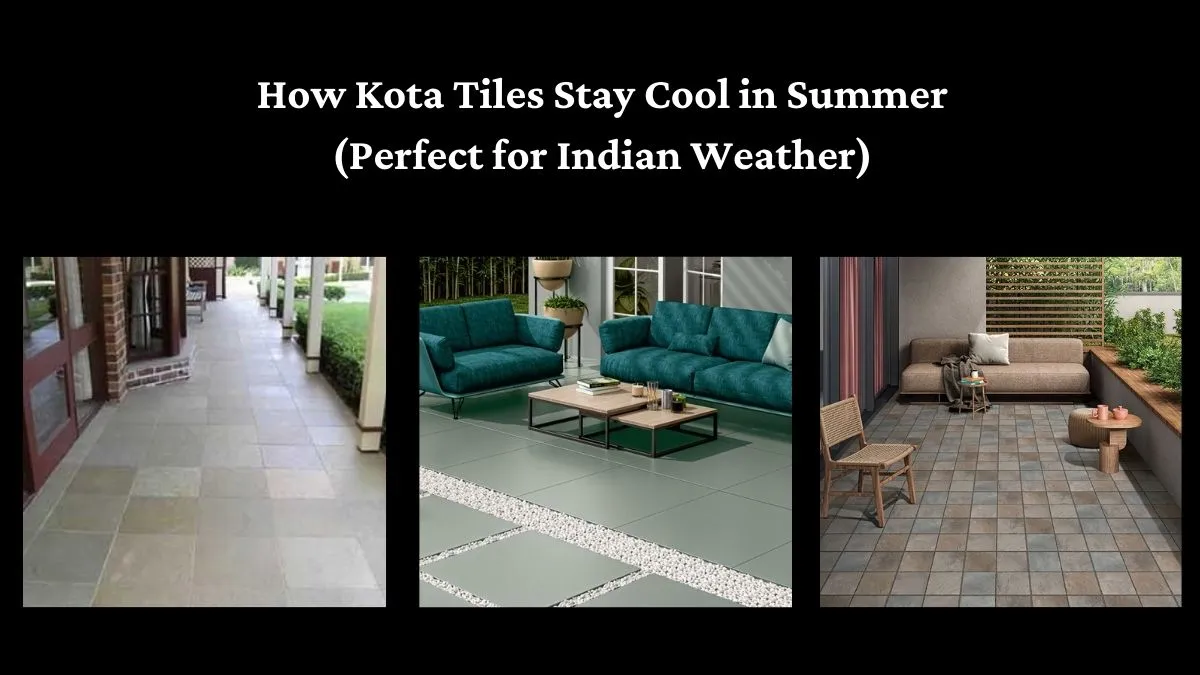
Indian summers are intense. In many regions, floor surfaces become so hot that walking barefoot indoors feels uncomfortable. This is exactly why Kota Tiles have remained one of the most trusted flooring choices in India for decades. From old havelis and courtyards to modern homes, offices, and schools, people still prefer Kota Stone Tiles—not only for durability but also for their natural cooling effect.
But what actually makes Kota Stone feel cool even during peak heat? Let’s understand the science and practical benefits behind it.
Kota Tiles are made from a naturally occurring limestone quarried in Rajasthan, mainly around Kota district. Sometimes people also refer to it as Cotta Stone flooring in construction terminology.
This stone is:
Because it is a natural material (not factory-manufactured like vitrified tiles), it behaves very differently in hot weather.
The primary reason Kota Stone Tiles feel cool is their low thermal conductivity.
In simple words — the stone does not absorb and store heat quickly.
When sunlight or hot air hits the floor:
But Kota Tiles resist heat absorption, so the floor temperature remains comparatively lower.
This is why you can comfortably walk barefoot on a Kota Stone floor even in May–June afternoons.
Unlike polished artificial tiles, Kota Stone has microscopic pores.
These tiny pores allow:
The effect is similar to how earthen pots keep water cool in summer. The stone releases stored coolness gradually, which keeps the indoor floor temperature pleasant.
Another scientific property is thermal mass.
Kota Stone:
So even when outside temperatures rise, the floor does not heat immediately. Traditional Indian homes used thick stone floors for this exact purpose — passive cooling without electricity.
Typical Kota Tiles come in:
These colors reflect more heat compared to darker surfaces. Dark granite absorbs heat, while Kota Stone Tiles reflect a portion of it, helping interiors remain cooler.
India experiences:
Because of this, flooring must help regulate indoor temperature. Kota Stone flooring naturally reduces heat gain, which supports traditional climate-responsive architecture.
You will commonly see Kota Tiles used in:
These places choose Kota Stone not just for cost — but for comfort.
This is why many modern homeowners are returning to natural stones.
| Flooring Type | Summer Heat Feel |
| Granite | Becomes hot quickly |
| Marble | Moderately warm |
| Vitrified Tiles | Surface heats fast |
| Ceramic Tiles | Retains heat |
| Kota Stone Tiles | Naturally cool |
Besides cooling, Kota Stone offers multiple practical advantages:
Cooler floors reduce dependency on AC and coolers, lowering electricity bills.
Perfect for Indian households where people often sit or walk on the floor.
Properly installed Kota Tiles can last 40–70 years.
Regular mopping and occasional polishing keep the surface fresh.
The natural texture makes it safer, especially for elders and children.
For maximum cooling benefit, install Kota Stone Tiles in:
Terraces with Kota Stone also reduce heat transfer to rooms below.
To maintain the cooling efficiency:
Proper maintenance keeps the stone breathable and effective.
The cooling property of Kota Tiles is not a myth — it is science. Their natural composition, porous structure, and heat-resistant nature make Kota Stone Tiles one of the most climate-suitable flooring options for India.
While modern flooring materials focus on appearance, Kota Stone offers something more valuable: comfort, sustainability, and temperature control. In a country with harsh summers, choosing natural Cotta Stone flooring is not just a traditional choice — it is a smart architectural decision.
If you want a home that stays comfortable without depending entirely on air-conditioning, Kota Tiles remain one of the best flooring solutions for Indian weather.
Contact us directly or drop us a mail and we will revert as soon as possible.
We fulfill the kota stones demand even to the remotest places of India..
Sethi Stones supplies Kota Stone from Rajasthan to residential, commercial and architectural projects across India and Nepal. Explore our location-specific pages for product availability, bulk requirements and supply information.

